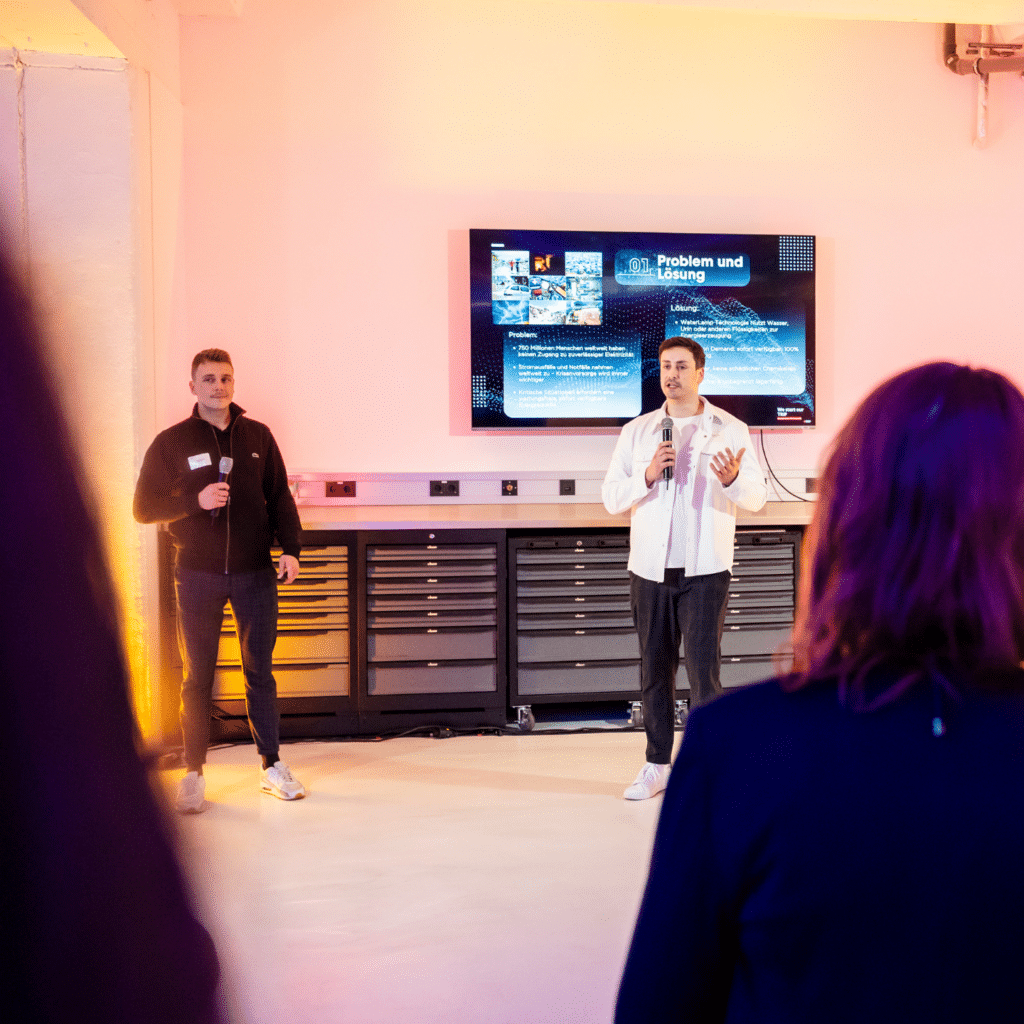
The pitch on stage – a big step for many founders.
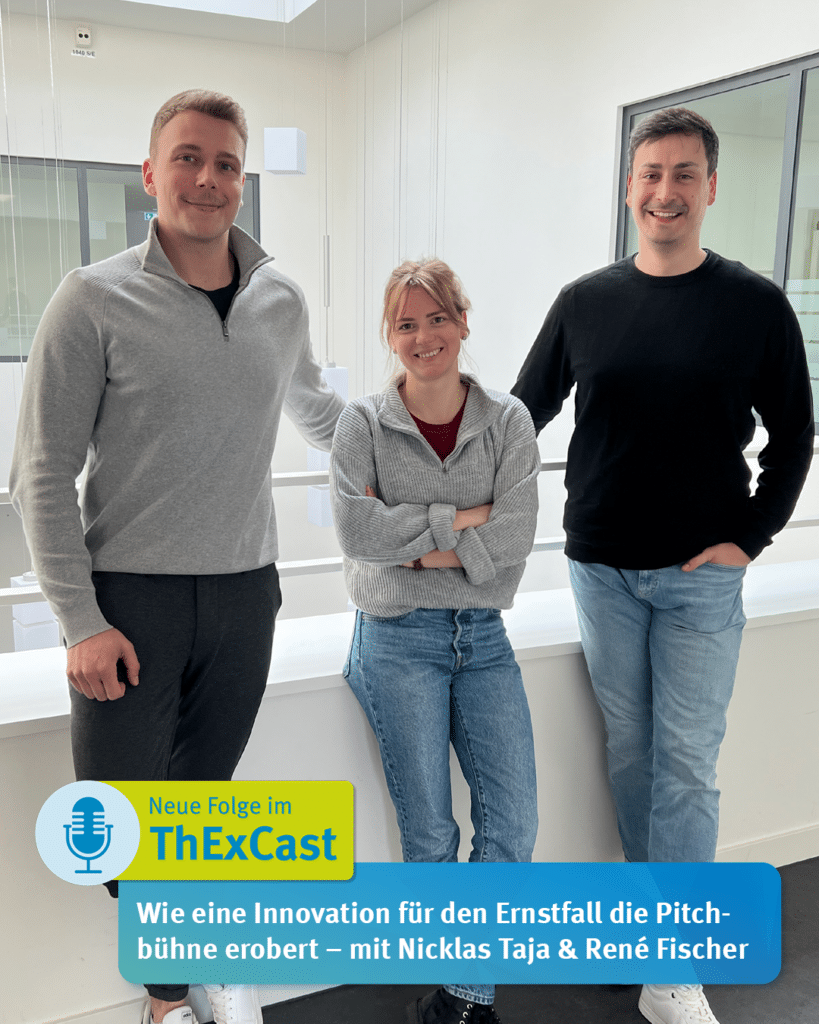
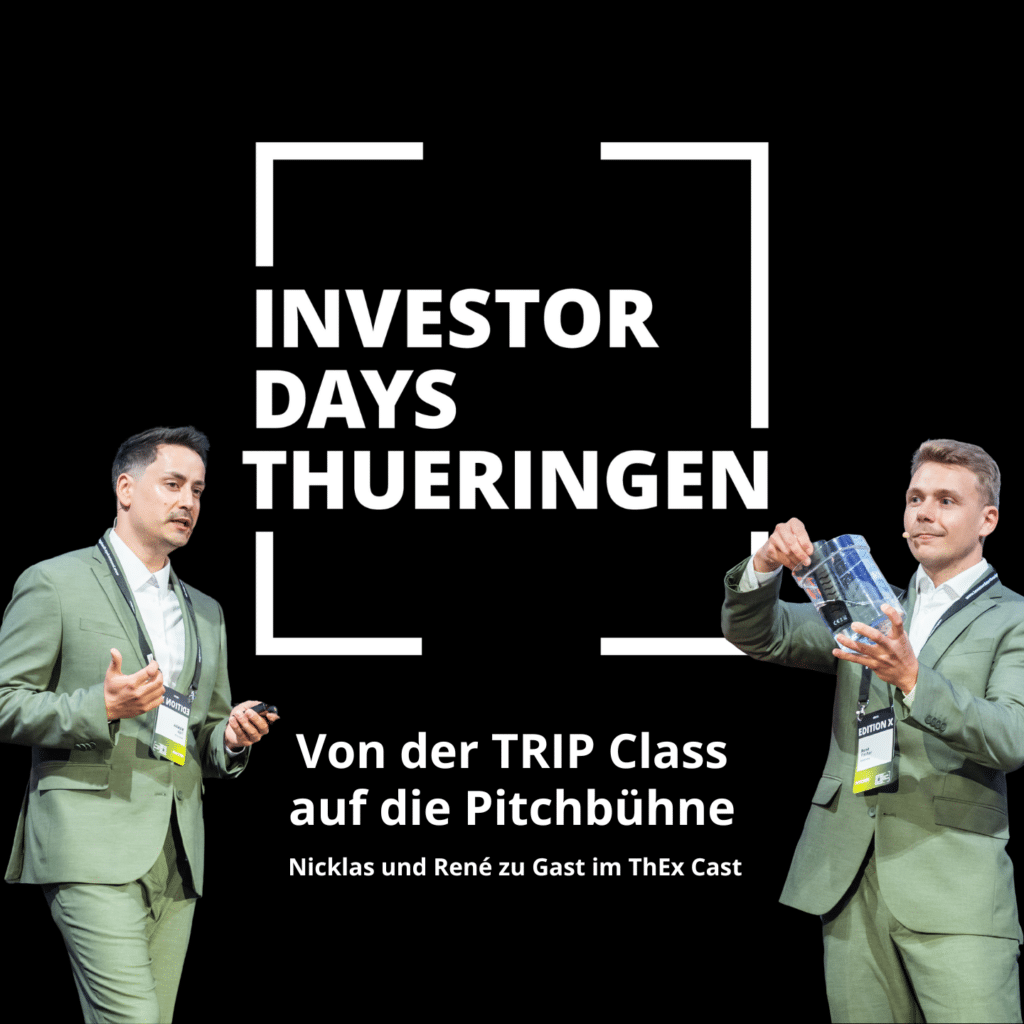
In the ThEx Cast, Nicklas Taja and René Fischer from WaterLamp report on how they experienced their pitch at the Investor Days Thuringia – and what happened afterwards.
In this episode, you’ll find out how to prepare, what to expect and why it’s worth applying.
Application deadline: May 03, 2026.
Melanie: Today we’re talking about a situation that excites many founders but also makes them nervous – the pitch on stage!
Sooner or later, anyone who builds up an innovative company will probably find themselves in a situation where they have to pitch their own idea on stage – in front of people who might invest or simply be the right contacts.
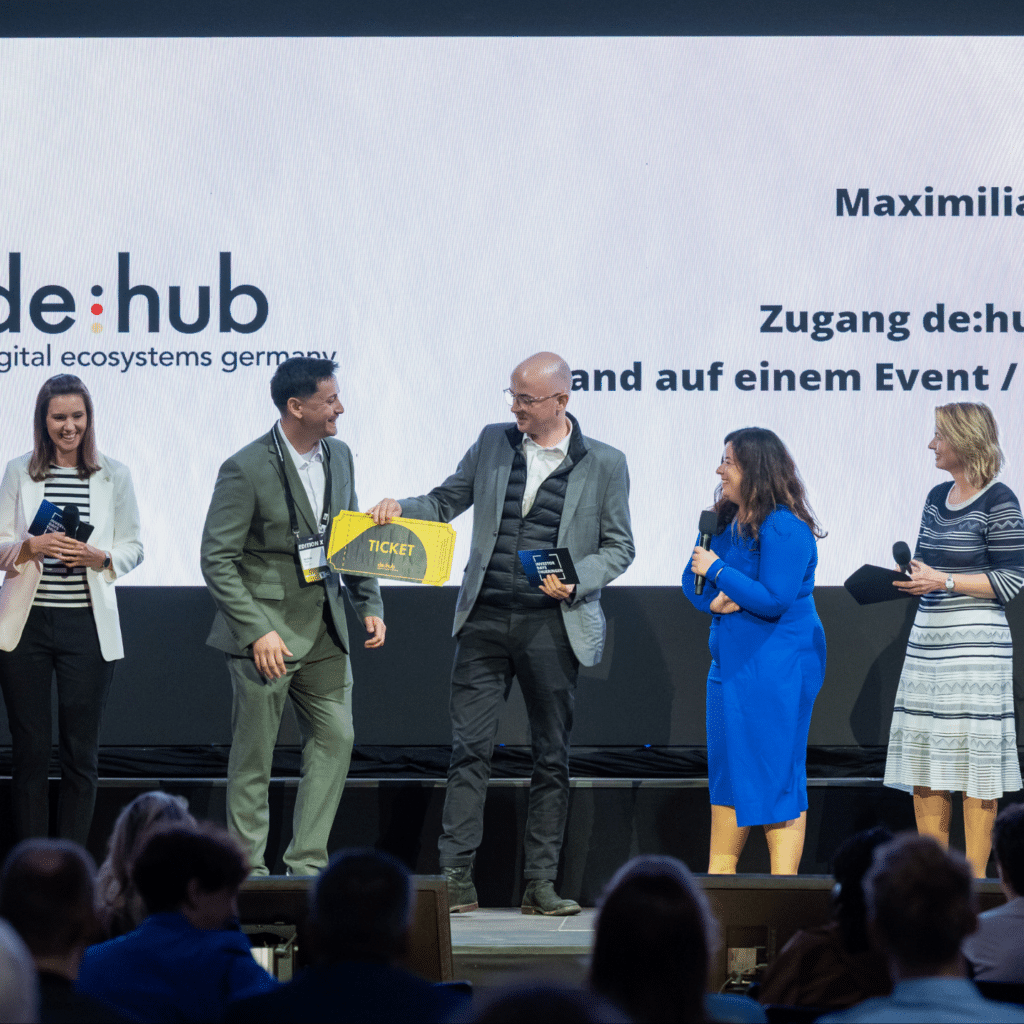
Just such a stage is set up every year in Thuringia at the Investor Days. Start-ups, investors and companies meet there.
Today’s guests are two founders who have already stood on this big pitch stage! We have Nicklas Taja and René Fischer as our guests. They are the founders of WaterLamp – a GreenTech startup that has developed lamps that generate energy through oxidation. The special thing about it is that the lamp works as soon as the handle is moistened, for example, and the whole thing can be used without batteries.
We are now talking together about how a young company can get onto such a stage and how to prepare for such a pitch.
Nice to have you here.
Nicklas & René: Hello, thank you for having us.
Melanie: In preparation for today’s episode, I did a bit of research on you guys and also found so many outdoor geeks on YouTube who have tested your flashlight.
Are you also extreme campers or something? Or how did you come up with a business idea in this area?
Nicklas Taja: So we’re not campers in that sense, but René and I, it has to be said, have been friends for a very long time, since childhood. And the idea has always been to start something of value for society and to work on it.
So it was through many different detours that we came across an inventor from Greece who has actually made it possible to generate energy from all water-based liquids. We were naturally extremely surprised that such a thing even existed and wanted to find out more about it.
Then we got in touch with him via many different detours and then said that we would like to work on this together – it has incredible potential. That was the start, so to speak, for everything else that was to come.
Melanie: If your product is the best known, I think the flashlight was also the first product, if you look at it that way, then the differences to a conventional flashlight with a battery are not that big.
I already said in the introduction that the secret behind it is oxidation. But maybe you can break it down a bit for people who haven’t studied physics.
René Fischer: Fortunately, we don’t need an advanced physics course to talk briefly about the technology and how our emergency flashlight works.
The fact is that it really is completely different from normal flashlights in the essential sense.
The WaterLamp emergency flashlight does not light up using batteries, rechargeable batteries, solar energy, wind or crank power like conventional flashlights, but shines through any water-based liquid.
Ultimately, the big difference is that we don’t store energy, as is the case with batteries or accumulators, but generate energy on demand using any liquid. Thirty milliliters of water or cola or lemonade is enough, or even your own urine would work in the worst case scenario…
Melanie: Here we are with the extreme campers.
René Fischer: The extreme campers, who may also have run into the forest, definitely have an absolutely reliable and safe solution that works reliably at any time, anywhere and regardless of the weather.
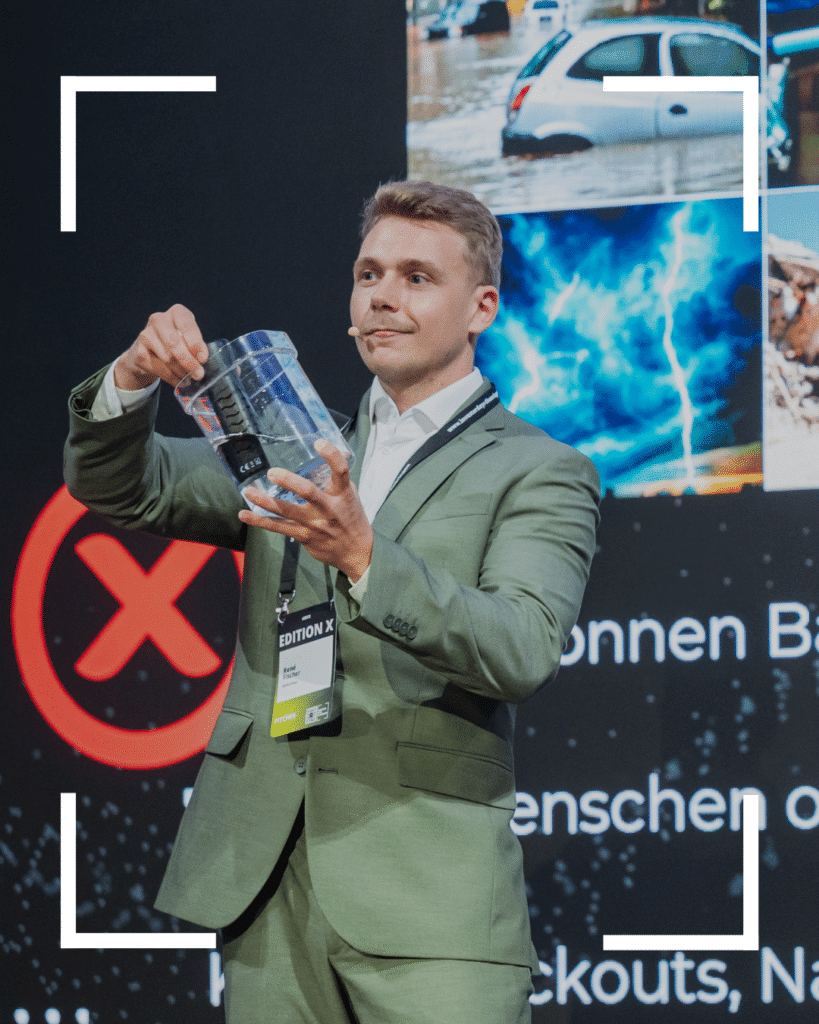
Melanie: That’s really great potential. I can imagine that, because especially when I’m out and about, I just need things that work reliably and – as you said – I can find water or liquids everywhere.
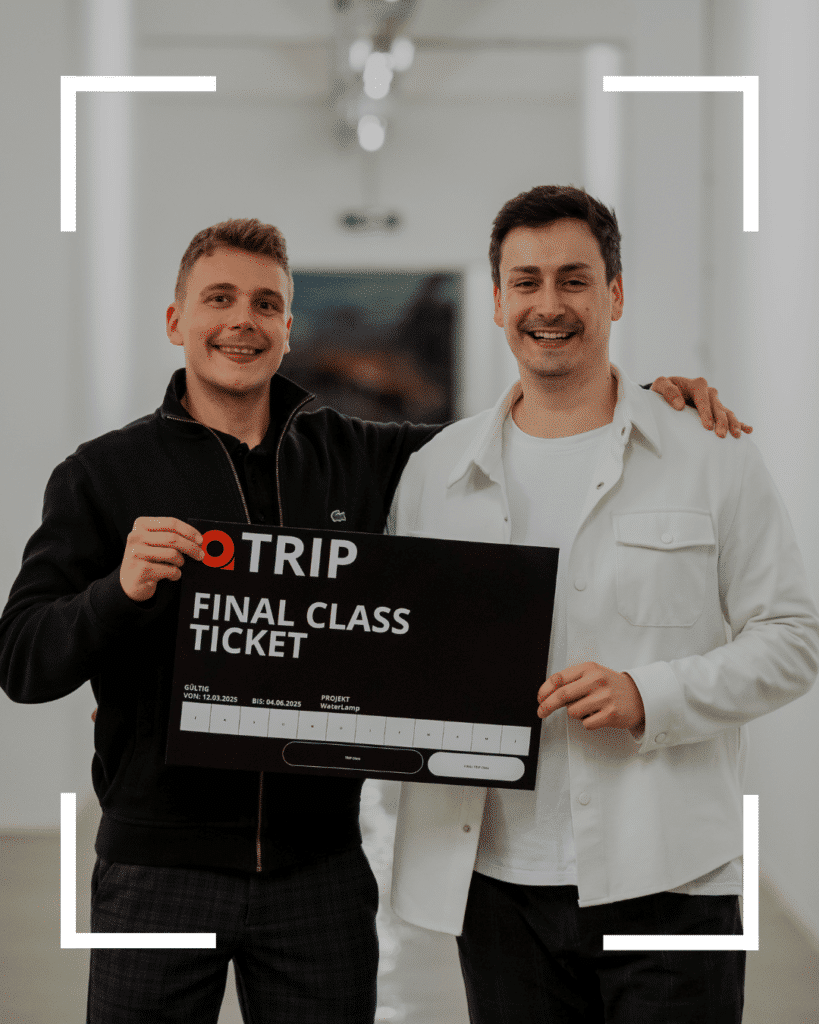
Let’s talk about your experience on the big pitch stage. The whole thing didn’t happen overnight, but before you stood on the big stage at the Investor Days Thuringia, you started with the TRIP Class – the regional accelerator program in Thuringia. How did you end up there in the first place?
Nicklas Taja: That actually came about through a recommendation, and it should perhaps also be said that this recommendation came at the last moment and we then… I think, René, that was four or five hours before the end of the application phase, that we really got to grips with it.
Melanie: Very spontaneous then.
Nicklas Taja: Absolutely! Sometimes you really have to be able to step on the gas when it comes to something really exciting. We looked into the program and Philipp Zacher from Jena, who is also a successful founder from Jena, gave us the idea that we should apply.
And then we worked it out, met up and then really worked on finalizing the application.
And yes, a short time later we received confirmation that we were in and yes, everything that followed was really worth its weight in gold.
Melanie: In a nutshell, what are the most important things that have helped you during this phase?
Nicklas Taja: In a nutshell, you have to imagine the program as having workshops over half a year, three quarters of a year, which then ended with the Thuringian Investor Days – last year up on the Petersberg.
And you can imagine that you meet roughly every two weeks, maybe sometimes every four weeks, to take part in a workshop in various areas.
You don’t get taught this at school in this form anyway, so it was worth its weight in gold for us. It was mainly about networking, but ultimately also about understanding what you need to found a startup in the first place.
Financing methods – how can you finance yourself – investor relations, for example, how do I build a business plan, what all needs to be included in the financial plan? In other words, a wide range of topics relating to founding and setting up a company.
In the end, it was really wonderfully organized with a wide variety of partners, including sometimes external consultants, and helped us very well to bring a common thread into our huge potential.
Melanie: And the first milestone – you’ve already said it – was standing on stage, pitching at the Investor Days. What goal did you go in with? I think that was the first big pitch. What was the goal behind this pitch?
René Fischer: In principle, it can be said that the main aim of this pitch was of course to simply show the audience what exciting and new technologies are available on the market. It was of course super valuable that so many exciting people were also represented in the audience. Whether from business or other areas, and of course you always have to say that this stage is also a great springboard for expanding your own network at the same time.
Of course, to be able to answer any follow-up questions and simply leave the event with great feedback.
Because it is always extremely important for a young entrepreneur to get good feedback and to have good support, to have to build up a strong network, because you always have a certain amount of willpower on your own, of course, but this strength only really becomes noticeable when you get down to business with the right support and the right network.
And that was definitely the aim of the Investor Days Thuringia.
Melanie: I think there are enough innovative companies that are thinking: “I definitely want to pitch because it could help me get ahead.” What do you think: What’s a good stage to be at when you’re pitching for the first time? What should already be clear? Fortunately, you had the TRIP class beforehand as preparation, but at what point do you think you should be?
Nicklas Taja: That’s not so easy to answer. We had ten to twelve different start-ups at different points in their development and in the development of a start-up and we all had the same process in the end.
The TRIP Class itself has been able to make an impact at so many different points, at different times, especially with a wide variety of start-ups.
And for us, it was simply the added value that we naturally wanted to develop from a small flashlight to larger solutions at that moment, and the TRIP Class helped us to bring in a structure.
The pitches themselves were of course perfect for presenting, because a pitch is there for me to explain the most important things about my business in the shortest possible time.
Of course, this is not always so easy with such potential and so many possibilities and options, which is why it was all the more important that we were able to try things out in front of a small specialist audience at the Demo Days, for example.
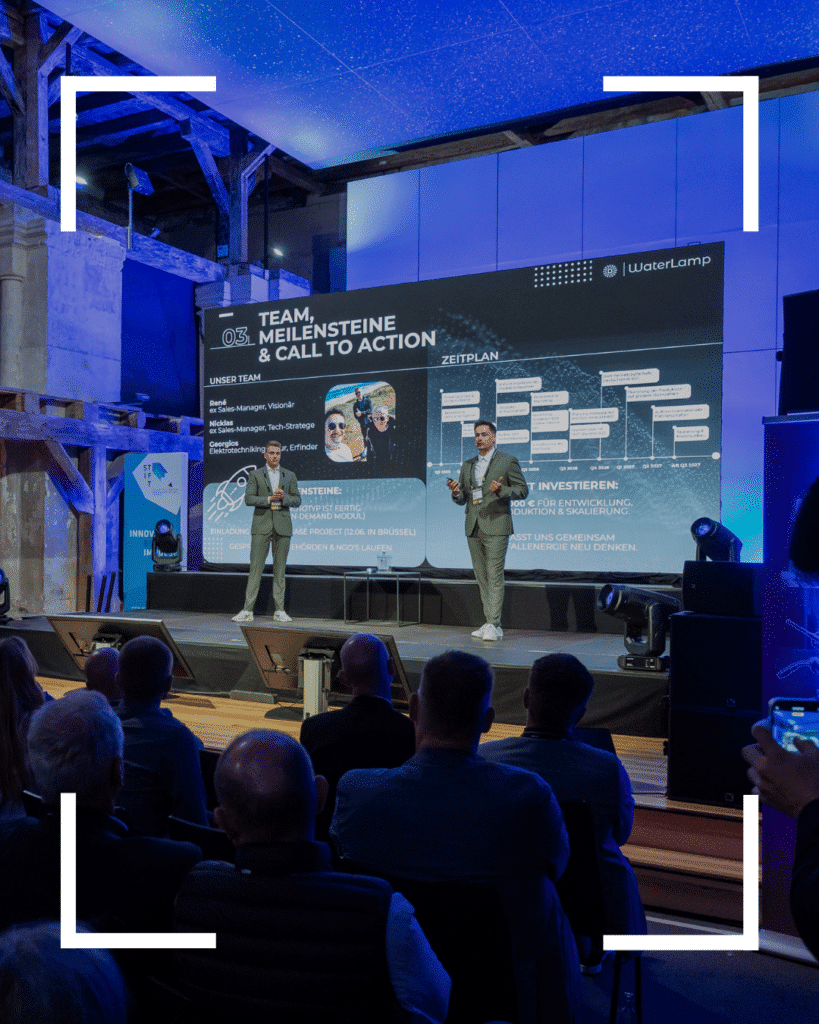
Yes, I’ll say the pitch on stage in front of about four hundred people was sensational, of course. I can still remember having to do breathing exercises beforehand to calm myself down. But when we were on stage, we definitely got it right and afterwards it felt really, really good.
Melanie: You’re already talking about the real exercises. You received pitch training in advance. What were the key takeaways for you? Obviously breathing exercises to keep the excitement down. What else can you recommend? What do you take away from such pitch training?
René Fischer: What is always super valuable and what we have also noticed is that you should build your pitch according to the common thread. It usually starts with a problem that needs to be solved, then you present your solution. What’s more, pitches are always about who you are presenting them to. It can be a normal audience, it can be investors, it can be a bank, it can be someone who might help you in your network.
But in this case, you always have different passages prepared for different pitches, which you can then integrate in a practical way.
But it is still important to keep an eye on the central theme, to keep an eye on the time and that you don’t spend a long time dealing with topics that the listener doesn’t find as exciting as you do, but where it’s really about hard facts.
Melanie: That means it also makes sense to practise this pitch a thousand times in advance, of course, but also to get feedback from an expert audience, but probably also from people who are perhaps not quite so close to the topic, right?
René Fischer: Absolutely! So it’s super valuable when you take feedback from all ranks, because of course an investor hears and sees from a completely different perspective than a normal private consumer who perhaps uses our technology for their own purposes.
And that is precisely the reason why these training sessions in advance, together with bm|t, were super valuable, because that is exactly where the people are who are interested in what we have to say on stage and if you internalize all this well and, in the best case, can apply it to your use cases, you are already super prepared.
Melanie: I could also imagine that once you’ve worked out a pitch like that, it’s probably something you can reel off in any situation if you’re woken up in the middle of the night, right?
Nicklas Taja: That’s exactly the philosophy we’ve been told time and time again. So no matter when, you have to have mastered the pitch so well and internalized it so well that when someone wakes you up at three o’clock at night, you have to be able to recite it with your eyes closed while half asleep. Practicing practicing practicing, that’s actually the most essential part of the whole thing. And René and I pulled it off wonderfully and of course always did our best. Even when the excitement was great. As I said, in combination with breathing exercises, as I did at least, it can help wonderfully when the audience is large and you’re looking at it from further down. That was really exciting!
Melanie: At the Investor Days, you have exactly three minutes for your pitch and if you get past that, you’ll be rudely removed from the stage by loud music. Then the microphone is turned off and that’s it. Unfortunately, that happened to you too. I think you were already on your last legs, but what was going through your head? Were you able to save and solve it in a charming way?
René Fischer: Yes, of course. Even if the clock has run out, it doesn’t mean that you automatically have to leave the stage straight away. You just have to strain your organ a little more, get a little louder and then these issues are usually resolved, especially as the audience also wants to see how you act when someone is completely upset on stage?
I think we solved that quite well in this context by simply saying what we wanted and where we wanted to go, even without loudspeakers.
And yes, of course you always realize – even when the clock is constantly being held in front of your eyes – that three minutes is a damn short time, especially when you’re in front of such a large audience and want to perform everything to the best of your ability, and it’s annoying that you sometimes fail in just five seconds, but you learn from your mistakes and of course you also grow with your tasks.
Melanie: I was just about to say that you turned these mistakes directly into an opportunity. And going onto a stage like that with a large portion of self-confidence is a challenge, but if you master it well, you also make a good first impression on potential investors.
After your pitch, things continued straight away, probably with the first interviews. I also saw an interview with MDR. How was that for you? Who approached you, did anything come up for you afterwards?
Nicklas Taja: Subsequently, we had more in-depth initial discussions ranging from expressions of interest to an exchange of contacts with people, i.e. lawyers, tax advisors, a managing director and the press. There were a wide variety of people, including of course – and this was what we were aiming for – lenders, where we went into the exchange, so to speak, and now of course also have to work on the whole thing. And that’s what we’ve been doing ever since.
We work a lot on the business plan to finalize and perfect everything. Then we can draw on the network we have built up, so to speak, and prepare the documents. Ultimately, that is still the case in the next step.
Melanie: The Investor Days are also evolving. This year, for the first time, there will be directly structured 1:1 matchings. This means that you will be brought together with investors who could potentially be of interest to you. Do you think this could make things even easier for participants in this year’s round? Is that a good thing? Or would you say that it’s also worth approaching people openly and with confidence?
René Fischer: In principle, I think it’s a mega great thing to have one-to-one matchmaking like this, especially as you always have a lot of question marks over your head as a startup: Am I doing this right? Am I on the right track? Will it even work out the way I envision it financially in the end? And of course an investor can provide a great deal of input in the early stages, which is of course also super essential for the founder, because at the beginning they really only ever focus on growing their baby. Another thing that tends to be forgotten is that you have to draw up a business plan and prepare a financial plan.
At the end of the day – no matter how much I love my project – it’s all about making a profit somewhere or becoming economically active and secure somewhere. And of course an investor sees it the same way. They have to form an opinion very early on as to whether the project has potential or not.
And accordingly, I can only ever agree that the earlier the better. The earlier you get together with the people who can really help you at the end of the day. The earlier you sit down at the table with them, the better it is for everyone involved.
Melanie: So to conclude, one more question for our listeners.
If you had to summarize three tips, what would you perhaps give to the participants of this year’s Investor Days, but also to others who have to pitch in certain situations?
Nicklas Taja: You must never forget – and this has always helped me personally – as I said, I was naturally very tense, I was also very excited and I had already mentioned the breathing exercise, but you must also never forget that the people in the audience are only human and they don’t want to see you fail at the front of the stage. So you don’t have to worry about being laughed at.
Many of the people in the audience wouldn’t even dare to go on stage and do what you’re doing. You must never forget that. They’re just people and they want to see that you’re successful up there and that you make a good pitch. So don’t be afraid of that. I already mentioned breathing exercises. Apart from that, practice practice practice.
And finally, what else can you give us along the way? The exchange with the people from the TRIP class is of course essential, for example taking the demo nights with you for training.
Especially when you’re standing in front of about fifty people for the first time, you can test it out and get a feel for it.
And time was a really important issue. Pitching the most important things about your business in the shortest possible time, in three minutes in the end, and always keeping the listener interested is just as important, so that they don’t fall asleep and you start with the wrong introduction or something like that.
Melanie: Finally, what are the next milestones you have planned for WaterLamp in 2026? Where do you want to go?
René Fischer: We have definitely set ourselves the milestone of developing our first prototype of a functioning, water-activated emergency energy case together with the get started 2gether competition this year.
At the same time, we are founding our new company called Liquid 2 Energy this year, together with our inventor Georgiosso that we can scale the technology to the next level in conjunction with interesting funding opportunities, a good network and the right trade fair appearances, so that we can prepare and set up everything else for the coming years.
Melanie: I’m keeping my fingers crossed for you. And if you’re out there thinking about presenting your idea on the big stage: The application for a pitch at the next Investor Days Thuringia is currently open until May 3rd. And if you want to prepare more intensively for investor contacts – the next trip class starts in September!
Thank you both for being there and all the best for you.
René & Nicklas: Thank you very much for the invitation!
You are currently viewing a placeholder content from Vimeo. To access the actual content, click the button below. Please note that doing so will share data with third-party providers.
More InformationYou are currently viewing a placeholder content from YouTube. To access the actual content, click the button below. Please note that doing so will share data with third-party providers.
More InformationYou need to load content from reCAPTCHA to submit the form. Please note that doing so will share data with third-party providers.
More Information